Singapore Property Investment Strategy: Building a $5M Portfolio for Retirement
 Delvin Goh
Disclaimer: This article is for general educational purposes only and does not constitute financial, legal, or professional advice. The information presented is based on publicly available data and may not reflect the most current regulations, rates, or policies. Every individual’s financial situation is unique. You should consult a qualified financial advisor, mortgage banker, or legal professional before making any property purchase or financing decisions. The author and this website accept no liability for any loss or damage arising from reliance on the information provided.
TL;DR: Property remains one of the most reliable wealth-building vehicles for Singaporeans, but only with the right strategy. This guide covers the three main approaches (own-stay appreciation, rental yield, portfolio building), walks through ABSD considerations for second properties, and maps out how a household earning $18,000 to $25,000/month can realistically build toward a $5M property portfolio for retirement using the $2.5M to $3.5M price range as a starting point.
Property Investment Strategy in Singapore: An Overview
A sound property investment strategy in Singapore is less about clever moves and more about matching the right approach to your life stage and your retirement goals. This guide maps three strategies that most households use, often blending them over time: own-stay appreciation, rental yield, and portfolio building toward a $5M base for retirement. Each one carries different cash, ABSD, and time-horizon implications, and the right starting point for buyers in the $2.5M to $3.5M range is almost always the first.
Why Property Investment Works in Singapore
Singapore has structural advantages that make property a strong long-term investment. I want to be upfront: property is not the only path to wealth, and it is not risk-free. But for most Singaporean households, it offers a combination of benefits that is difficult to replicate elsewhere.
- Land scarcity: Singapore is about 733 sq km with a resident population (citizens and PRs) of about 4.2 million as of mid-2025, and a total population exceeding 6 million when you include non-residents who drive rental demand. Developable land is finite and government-controlled. This creates a natural floor under property values
- Strong rule of law: Property rights are well-protected, and the regulatory environment is transparent and stable
- Controlled supply: The Government Land Sales (GLS) programme regulates new supply, preventing the kind of oversupply that crashes markets in other countries
- CPF as a funding mechanism: The ability to use CPF for property purchases gives Singaporeans a significant financing advantage. While a few countries have similar schemes (Malaysia’s EPF, Australia’s superannuation), Singapore’s CPF-for-property framework is unusually flexible and generous in how much can be applied toward a purchase
- Consistent long-term appreciation: Private property prices in Singapore have grown at an average of 3% to 4% per annum over the past 20 years, with periods of stronger growth punctuated by policy-induced corrections (see the Q2 2026 market outlook for current segment-by-segment trends)
That said, the government actively manages the market through cooling measures. ABSD, TDSR, and LTV limits all exist to moderate speculation. This means Singapore property rewards patient, strategic investors, not speculators.
The Three Investment Strategies
Not every property purchase needs to be a “pure investment.” Most Singaporean households blend these strategies over their lifetime. Here is how each one works.
Strategy 1: Own-Stay Appreciation
This is the most common and often the most effective strategy for households in the $2.5M to $3.5M range. You buy a property to live in, benefit from capital appreciation over time, and avoid ABSD entirely on your first property.
How it works:
- Purchase a well-located condo in a district with strong demand fundamentals
- Live in it for 5 to 10 years while the property appreciates
- Use the equity gained to either upgrade or fund a second property
Why it works in the $2.5M to $3.5M range:
- This price range targets the mid-to-upper segment of the private market, covering areas like Districts 9, 10, and the city-fringe Districts 3, 5, 15, and 21
- Properties in this range tend to be in established neighbourhoods with mature amenities, good schools, and proximity to MRT stations
- The buyer pool for this segment is deep. Both upgraders and right-sizers compete for the same units, supporting resale demand
Realistic example:
A couple purchases a 3-bedroom unit in District 15 (East Coast/Katong area) for $3.0M in 2026. Assuming 3.5% annual appreciation (in line with the 20-year historical average for well-located OCR/RCR properties):
| Year | Property Value | Equity Gained |
|---|---|---|
| Year 0 | $3,000,000 | $0 |
| Year 5 | $3,563,000 | $563,000 |
| Year 10 | $4,233,000 | $1,233,000 |
| Year 15 | $5,028,000 | $2,028,000 |
After 10 years, the household has built over $1.2M in equity from appreciation alone. Note that mortgage principal repayments add further to net equity, though this is partially offset by interest payments over the same period. At a 3.5% interest rate on a $2.25M loan, you would pay roughly $600,000 to $700,000 in interest over 10 years, which is a real cost to factor into your overall returns.
For context, 3.5% is a conservative estimate. Singapore home loan rates have historically ranged from around 1.5% to 4%, depending on the interest rate environment. Over the past two decades, the long-term average has been closer to 2% to 2.5%. If rates normalise to that range, your interest cost would be significantly lower, making the equity build-up faster.
Strategy 2: Rental Yield
This strategy involves purchasing a property primarily for rental income. It requires owning a second property, which means paying ABSD, so the maths need to work harder.
Current rental yield benchmarks (2026):
| Property Type | Location | Typical Gross Yield |
|---|---|---|
| 1-bed condo (500 to 600 sqft) | CCR (D9, D10) | 3.0% to 3.5% |
| 2-bed condo (700 to 900 sqft) | RCR (D3, D5, D15) | 3.2% to 3.8% |
| 3-bed condo (1,000 to 1,200 sqft) | OCR (D21, D23) | 2.8% to 3.3% |
| Compact 1-bed (400 to 500 sqft) | CBD fringe | 3.5% to 4.2% |
The ABSD challenge:
For a Singapore Citizen buying a second property, 20% ABSD applies. On a $2M investment property, that is $400,000 in additional upfront cost. This dramatically changes the yield calculation:
| Item | Without ABSD | With 20% ABSD |
|---|---|---|
| Purchase price | $2,000,000 | $2,000,000 |
| ABSD | $0 | $400,000 |
| BSD | $69,600 | $69,600 |
| Total capital outlay | $2,069,600 | $2,469,600 |
| Annual rental income (3.5% gross) | $70,000 | $70,000 |
| Effective gross yield on total outlay | 3.38% | 2.84% |
After ABSD, gross yields compress significantly. Net yields (after maintenance fees, property tax, income tax on rental, and vacancy) typically come in at 1.5% to 2.2%. This is why pure rental yield investing in Singapore is rarely the primary strategy. It needs to be paired with capital appreciation expectations.
An important perspective on rental income in Singapore:
Rental income is best understood as a secondary benefit or a fallback, not the main wealth driver. In practice, rental is most valuable when you need to tide through unexpected situations: a retrenchment, an overseas job opportunity, or a period where you need flexibility before your next move. It provides a safety net rather than a primary income stream.
This is also broadly in line with how the Singapore government views property ownership. The emphasis has always been on owner-occupation. You can see this in how policies are structured: ABSD makes pure investment purchases expensive, property tax rates for non-owner-occupied properties are significantly higher (12% to 36% versus 0% to 32% for owner-occupied), and the HDB system is fundamentally designed around the principle that Singaporeans should own the home they live in. The message is clear: property is primarily a home, and the investment upside is a benefit of ownership, not the other way around.
When rental yield strategy makes sense:
- You already own your home and have excess capital
- You need the flexibility of rental income as a safety net (career transitions, overseas moves, or bridging periods between property transactions)
- You are purchasing in a high-demand rental area (near business districts, international schools, or hospitals)
- You are comfortable with a long holding period (7 to 10+ years) to amortise the ABSD cost through appreciation
Strategy 3: Portfolio Building Toward $5M
This is the long game. The goal is to build a property portfolio worth $5M or more by retirement, providing both a capital base and potential rental income streams. Here is a practical roadmap for households earning $18,000 to $25,000/month.
Phase 1 (Years 0 to 5): Establish the Foundation
- Purchase your own-stay property in the $2.5M to $3.5M range
- Focus on a well-located unit with strong appreciation potential
- Aggressively pay down the mortgage to build equity and improve TDSR headroom for future purchases
- Target: Own a property worth $3.0M to $3.8M by end of Phase 1
Phase 2 (Years 5 to 10): Grow Your Position
- By year 5 to 7, you should have significant equity in your first property
- Options at this stage:
- Option A (most common): Sell and buy larger together. Sell Property 1, capture the appreciation gains, and purchase a larger or better-located property at a higher price point. This avoids ABSD entirely and concentrates your equity into a stronger asset. For example, selling a $3.5M property and buying at $4.5M to $5M puts you on track without the complexity of managing two properties
- Option B: Decouple and buy individually. If married, one spouse can transfer their share to the other (decoupling). The spouse who no longer owns property can then buy a “first property” without ABSD. Note: legal fees, stamp duty on the transfer, and CPF refund obligations apply (see decoupling section below)
- Option C: Keep Property 1 and buy Property 2 with ABSD. If the numbers work and you have the cash for 20% ABSD, this preserves your existing asset. In practice, few buyers choose this route because the ABSD cost is substantial. On a $2M second property, that is $400,000 upfront
Phase 3 (Years 10 to 15): Consolidate and Optimise
- By this stage, your property should have appreciated meaningfully
- Your mortgage balance should be significantly reduced
- Assess whether to hold, sell, or restructure based on market conditions and retirement timeline
- Target: Total portfolio value of $5M+
Illustrative portfolio trajectory:
| Phase | Action | Est. Portfolio Value |
|---|---|---|
| Year 0 | Buy Property 1 at $3.0M | $3.0M |
| Year 5 | Property 1 appreciates to ~$3.6M | $3.6M |
| Year 7 | Buy Property 2 at $1.8M (via decoupling) | $5.1M |
| Year 10 | Properties appreciate to ~$4.2M + ~$2.1M | $6.3M |
| Year 15 | Properties appreciate to ~$5.0M + ~$2.5M | $7.5M |
These numbers assume 3.5% annual appreciation and no further injections. Actual results will vary depending on market cycles, property selection, and holding period.
Using Rental Income as a Retirement Strategy
A common question I hear is whether rental income can fund retirement. It is the right question to ask, but the honest answer needs nuance, and it hinges almost entirely on one thing: whether the property is still mortgaged.
While you are still servicing a loan, the maths is tight. As shown above, net yields in Singapore typically land between 1.5% and 2.2% once you account for maintenance fees, property tax at the higher non-owner-occupied rate, income tax on rent, and vacancy. After the mortgage payment, the cash left over is often modest. This is exactly why rental income is best understood as a supplementary stream, not the main wealth driver, a point the rest of this guide returns to repeatedly.
Retirement changes the picture in one important way. A property that is fully paid down by the time you retire has no mortgage to service, so a far larger share of the gross rent converts to net income you can actually spend. The same property that produced thin cash flow during the loan years can become a genuine supplementary income stream once the debt is cleared. That is the realistic version of “rental income for retirement”: not a get-rich scheme, but a paid-off asset quietly topping up your CPF payouts and other retirement income.
A few honest caveats so you plan with eyes open:
- The net yield figures still apply. Even mortgage-free, a 1.5% to 2.2% net yield on a multi-million-dollar property is a useful supplement, not a salary replacement. Size your expectations accordingly.
- Capital appreciation usually does the heavier lifting. Over a long holding period, the growth in the property’s value typically contributes more to your retirement wealth than the rent collected along the way.
- ABSD shapes whether a second property even makes sense. Buying a dedicated rental property means paying 20% ABSD on a Singapore Citizen’s second purchase. This is a cost to weigh, never a tax to work around. The cleaner route for many households is simpler: pay down the home you already own so it is unencumbered by retirement, then decide whether to rent it out, right-size, or hold.
In short, rental income can absolutely play a role in a Singapore retirement, but as a supplement to a paid-down asset base, not as a substitute for one.
ABSD Considerations: The Biggest Variable
ABSD is the single largest cost factor that shapes your investment strategy. Here is the current ABSD rate table for residential property purchases in Singapore:
| Buyer Profile | 1st Property | 2nd Property | 3rd+ Property |
|---|---|---|---|
| Singapore Citizen | 0% | 20% | 30% |
| Permanent Resident | 5% | 30% | 35% |
| Foreigner | 60% | 60% | 60% |
Strategies to Manage ABSD
1. Decoupling (for married couples)
One spouse transfers their share of the jointly-owned property to the other. The transferring spouse then becomes a “non-property owner” and can purchase a second property at the first-property ABSD rate (0% for SC, 5% for PR).
Costs and considerations for decoupling:
- BSD on the transfer (based on half the property’s market value)
- Legal fees ($5,500 to $7,000 for two lawyers, one per spouse)
- Possible loan restructuring costs
- CPF refund obligation: The spouse transferring their share must refund all CPF used for the property (principal plus accrued interest) back into their CPF account. The buying spouse effectively needs to fund this amount as part of the transfer. This can be a significant sum, especially if CPF was used for the downpayment and mortgage over several years
On a $3M property, the BSD on a 50% transfer ($1.5M) is approximately $44,600. Compare this to the 20% ABSD on a $1.8M second property ($360,000), and the cost difference is over $315,000. Make sure you account for the CPF refund obligation when planning your cash flow.
2. Sell first, then buy
If you sell your existing property before purchasing the next one, you reset to “zero properties” and pay 0% ABSD as a Singapore Citizen. The timing risk is that you need temporary housing during the gap, and market prices may move against you.
3. ABSD remission for married couples
Married couples (where at least one spouse is a Singapore Citizen) who buy a replacement property jointly can apply for ABSD remission, provided they sell their existing property within 6 months of purchase (or within 6 months of TOP for uncompleted properties). The ABSD must be paid upfront in cash; the remission is processed as a refund.
Decision Framework: Which Strategy Is Right for You?
Use this as a starting point to match your situation to the right approach. Note that these strategies are not mutually exclusive. Portfolio building toward $5M can absolutely be achieved through a single own-stay property that appreciates over time (as shown in the example above, where a $3M property grows to $5M in 15 years), or through a combination of own-stay and a second property. The three strategies below represent different emphases, not separate paths.
| Factor | Own-Stay Appreciation | Rental Yield | Multi-Property Portfolio |
|---|---|---|---|
| Household income | $16,000 to $22,000/month | $22,000+/month | $20,000 to $25,000+/month |
| Available cash | $150,000 to $250,000 | $500,000+ (ABSD buffer) | $200,000+ (scaling over time) |
| Risk tolerance | Moderate | Moderate to High | Higher (multiple assets) |
| Time horizon | 5 to 10 years | 7 to 10+ years | 10 to 15 years |
| ABSD impact | None (1st property) | Significant (2nd property) | Managed via decoupling/sequencing |
| Best for | HDB upgraders, first-time buyers | High-income earners with excess capital | Couples looking to build across multiple assets |
Practical Budget Breakdown: $3M Purchase
Here is what a $3M property purchase actually costs for a Singapore Citizen buying their first private property:
| Cost Component | Amount | Payable By |
|---|---|---|
| Purchase price | $3,000,000 | Cash + CPF + Loan |
| Cash downpayment (5%) | $150,000 | Cash |
| CPF downpayment (20%) | $600,000 | CPF OA |
| Bank loan (75% LTV) | $2,250,000 | Monthly mortgage |
| BSD | $119,600 | Cash upfront (reimbursable from CPF later) |
| Legal fees + disbursements | $3,500 | Cash |
| Miscellaneous (valuation, etc.) | $1,500 | Cash |
| Total upfront cash needed | ~$274,600 | |
| Total upfront CPF needed | ~$600,000 |
Note: Buyers do not pay agent commission when purchasing property in Singapore. Commission is paid by the seller. BSD must be paid in cash first but can be reimbursed from your CPF OA afterwards. For a complete breakdown of how much cash you actually need to buy a condo, see the dedicated guide.
Monthly mortgage assessed at the 4.0% stress-test rate over 25 years: approximately $11,880/month (actual packages are around 1.6% as of mid-2026, so your real payment is lower). Under TDSR (55% of gross income), qualifying requires a gross household income of at least $21,600/month, assuming no other debt obligations.
Common Mistakes to Avoid
Having helped many clients build their property portfolios, these are the mistakes I see most often:
- Buying based on emotion, not numbers: Every property purchase should be backed by a clear financial model covering expected appreciation, rental yield potential, and exit strategy
- Ignoring ABSD in the calculation: I have seen clients plan for a second property without factoring in the 20% ABSD. This can derail an entire investment timeline
- Over-leveraging: Just because you qualify for a $3.5M loan does not mean you should use it all. Leave buffer for interest rate increases and unexpected expenses
- Chasing rental yield alone: In Singapore, capital appreciation is the primary wealth driver. Rental yield is supplementary. Do not buy a high-yield property in a poor-appreciation location
- Not planning the sequence: The order in which you buy, sell, and decouple matters enormously for ABSD and financing. Plan the sequence before committing to any transaction
- Short holding periods: Transaction costs (BSD, agent fees, legal fees) on a $3M property exceed $150,000. You need to hold for at least 3 to 5 years just to break even on costs, and longer to generate meaningful returns
The Role of an Agent in Your Investment Strategy
I want to be transparent about why working with a knowledgeable property agent matters for investment decisions. This is not about finding you a unit. Any agent can do that. It is about:
- Running the numbers: I model different scenarios for every client. Appreciation projections, rental yield analysis, ABSD impact, decoupling costs, TDSR calculations. You need these numbers before committing
- Sequencing your moves: The difference between buying then selling vs. selling then buying can be hundreds of thousands of dollars in ABSD
- Identifying value: Not every $3M property is equal. Location, tenure, developer track record, floor plan efficiency, and upcoming infrastructure all affect long-term returns
- Stress-testing the plan: What happens if interest rates rise to 4.5%? What if rental vacancy runs for 3 months? A good strategy survives adverse scenarios
Those four are the substance of a property consultation. If you want the record behind the advice, it is in the transactions I have handled.
Building Toward $5M: A Summary
Here is the simplified roadmap:
- Start with a strong first property ($2.5M to $3.5M) in a well-located district with proven appreciation
- Pay down aggressively for the first 5 to 7 years to build equity and TDSR headroom
- At the right time, either upgrade your own-stay property to a higher value asset, or evaluate decoupling/selling to add a second property. A single well-located property can grow from $3M to $5M over 15 years on its own. Alternatively, selling and upgrading to a $4.5M to $5M property accelerates the timeline
- Hold for the long term and let compounding appreciation do the heavy lifting
- Review and rebalance every 3 to 5 years based on market conditions and your evolving financial situation
The $5M target is achievable for most dual-income households in the $18,000 to $25,000/month range, provided you start with a sound strategy and execute patiently over 10 to 15 years. The key is not timing the market perfectly. It is time in the market, with the right assets.
Frequently Asked Questions
Can rental income fund my retirement in Singapore?
It can supplement retirement income, but it is rarely enough to fund retirement on its own while you still carry a mortgage. After ABSD, maintenance fees, property tax at the higher non-owner-occupied rate, income tax on rent, and vacancy, net yields in Singapore typically land between 1.5% and 2.2%. The picture improves meaningfully once the property is fully paid down. With no mortgage to service in retirement, a far larger share of the gross rent converts to net income you can actually spend. The realistic way to think about it is this: rental income is a useful supplementary stream and a safety net, while capital appreciation over a long holding period remains the main wealth driver.
What is a good long-term property investment strategy in Singapore?
For most households in the $2.5M to $3.5M range, the most reliable long-term strategy is own-stay appreciation: buy a well-located property, live in it, avoid ABSD on your first home, and let it appreciate over 10 to 15 years. From there you can either upgrade to a higher-value asset or, if married, restructure ownership through decoupling to add a second property, each spouse holding one home so future purchases are not taxed as a second property. A single well-located home can realistically grow from around $3M to $5M over 15 years on its own. The principle that matters most is patience: it is time in the market with the right assets, not timing the market, that builds the portfolio.
I wrote a free guide that goes deeper into this topic. Download Building a Dignified Retirement here. It covers the wealth gap framework, portfolio phasing, and practical examples you can apply to your own situation.
Get the free retirement planning guide
Calculate your retirement number and see how property fits into your wealth plan. I'll email you the guide.
You're all set.
The guide is on its way to your inbox. If you've downloaded one of my guides before, check that earlier email.
Something went wrong. Please try again, or email me at delvin@delvingoh.com.
About Delvin Goh
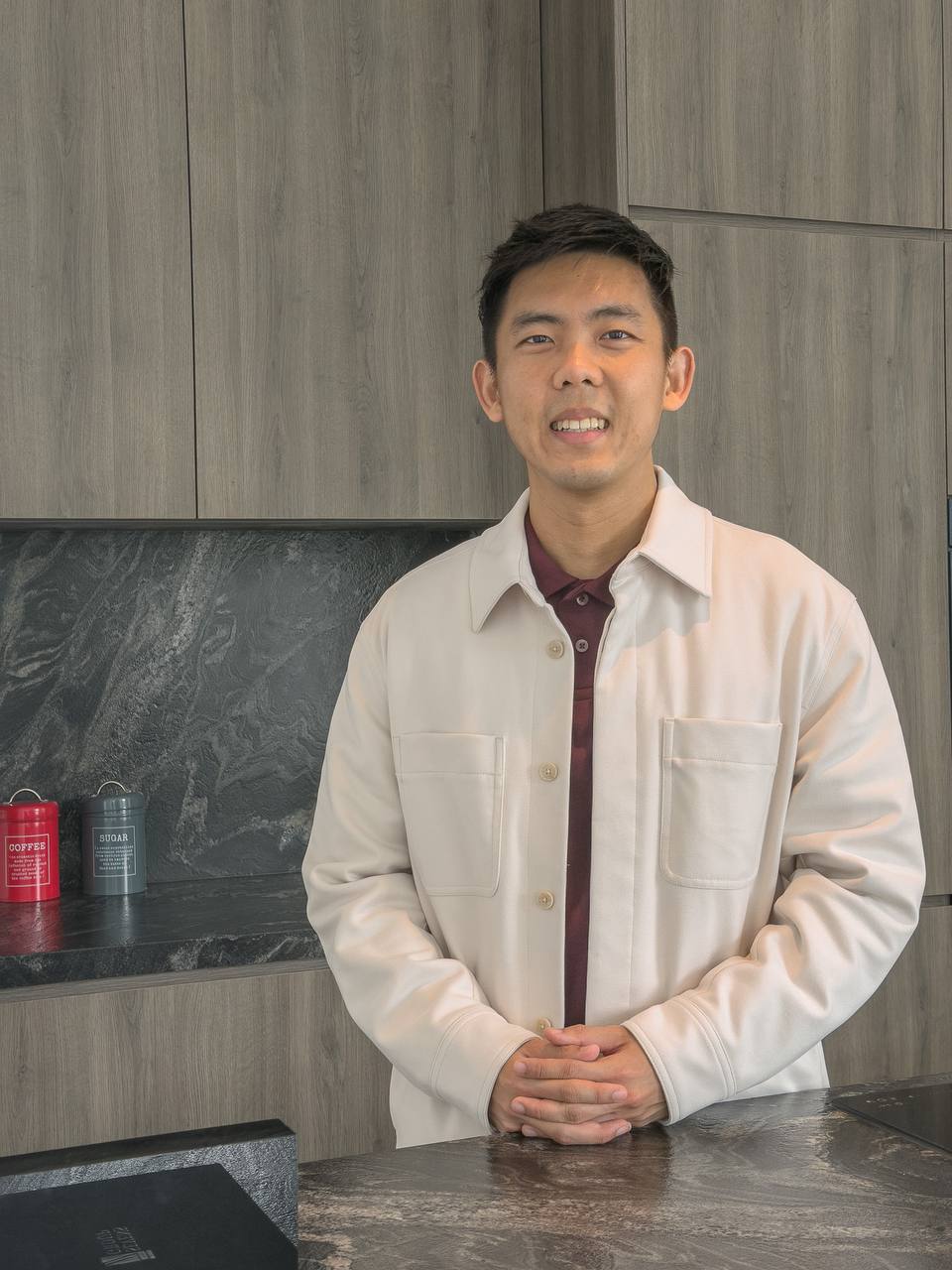
Delvin is a licensed property agent based in Singapore, focusing on private residential property and helping busy professionals build their property portfolios. With a data-driven approach and an Economics degree from NUS, he guides clients through every stage of their property journey — from first purchase to portfolio growth. Delvin is known for his straightforward advice, deep market knowledge, and commitment to delivering results.
Book an Appointment →
Ready to Take the Next Step?
Whether you are buying, selling, or exploring your options, I offer a free consultation to help you make confident property decisions.
Book an Appointment