Singapore Cooling Measures 2026: What's Still in Force
 Delvin Goh
Disclaimer: This article is for general educational purposes only and does not constitute financial, legal, or professional advice. The information presented is based on publicly available data and may not reflect the most current regulations, rates, or policies. Every individual’s financial situation is unique. You should consult a qualified financial advisor, mortgage banker, or legal professional before making any property purchase or financing decisions. The author and this website accept no liability for any loss or damage arising from reliance on the information provided.
TL;DR: Singapore’s property market enters Q2 2026 with steady but moderated price growth after several rounds of cooling measures. Interest rates have eased from their 2023-2024 peaks, improving affordability. The government remains vigilant on speculation, but fundamentals such as limited land supply, strong GDP growth, and population targets continue to support long-term demand.
Singapore Property Cooling Measures 2026: Current Status
Before looking at prices and rates, here is where every major cooling measure stands going into Q2 2026. All of them remain in force. There has been no rollback.
| Cooling Measure | Current Status (2026) |
|---|---|
| ABSD (Singapore Citizens) | Still in force. 0% on first property, 20% on second, 30% on third and subsequent |
| ABSD (Permanent Residents) | Still in force. 5% on first, 30% on second, 35% on third and subsequent |
| ABSD (Foreigners) | Still in force. 60% on any residential purchase |
| ABSD (entities and trusts) | Still in force. 65% on residential purchases by entities and trusts |
| TDSR | Still in force. Total debt capped at 55% of gross monthly income |
| LTV limit | Still in force. 75% maximum for borrowers with no existing housing loan |
| Mortgage stress-test floor | Still in force. Loans assessed at a medium-term interest rate of 4.0% |
| Seller’s Stamp Duty (SSD) | Still in force. Payable if you sell residential property within the 4-year holding period |
The combined effect is a market that rewards genuine owner-occupiers and long-term holders while making short-term speculation expensive. The SSD in particular discourages quick flips: sell within the four-year window and you pay a tapering duty on the sale price, which erodes any short-term gain.
Have cooling measures changed in 2026?
No. As of Q2 2026, there has been no rollback or relaxation of any cooling measure, and no change has been officially announced. The prudent approach is to plan your purchase around the rules currently in force, not around the possibility that they might change. We do not speculate on future policy moves.
Market Performance: Where We Stand
The Singapore private residential property market has demonstrated remarkable resilience heading into 2026. After the significant cooling measures introduced in April 2023, which raised ABSD rates to 60% for foreigners, the market recalibrated rather than collapsed. Transaction volumes dipped initially but have since stabilised, and prices have continued their upward trajectory, albeit at a more measured pace.
According to the URA Private Residential Property Price Index, prices rose 3.4% in 2025 (the smallest annual increase since 2020), a notable deceleration from the 3.9% increase in 2024, the 6.8% gain in 2023, and the double-digit gains of 2021 to 2022. This moderation is exactly what the government intended: sustainable growth rather than speculative surges. (Price index figures as of the URA Q4 2025 release; confirm against the latest URA data.)
Price Trends by Segment
The per-square-foot ranges below are indicative averages as of Q2 2026 and vary widely by development, tenure, and unit size. Confirm current pricing for any specific project before relying on these figures.
Core Central Region (CCR)
The CCR, encompassing Districts 9, 10, and 11, has seen a return of buyer interest after a period of adjustment. New launches in the Orchard and Tanglin areas have achieved strong take-up rates, particularly from Singaporean upgraders. Average prices in the CCR hover around $2,800 per square foot, with prime freehold developments commanding $3,200 and above.
Rest of Central Region (RCR)
The RCR continues to be the sweet spot for owner-occupiers and mid-range investors. City-fringe districts such as 3, 4, 5, 7, and 8 have seen steady demand, with prices averaging $2,200 to $2,600 per square foot. The ongoing transformation of the Greater Southern Waterfront has boosted sentiment in Districts 3 and 4.
Outside Central Region (OCR)
Mass-market private condos in the OCR remain the most accessible entry point for first-time buyers, with prices stabilising around $1,600 to $1,900 per square foot. Executive Condominiums (ECs) are a separate category with their own eligibility rules and pricing, so they are not included in these private condo figures, though they remain an attractive option for eligible buyers.
Interest Rate Environment
The interest rate landscape has shifted sharply in favour of buyers. After peaking at around 4.0% to 4.2% for fixed-rate packages in late 2023, mortgage rates have fallen significantly. As of May 2026, competitive fixed-rate packages are available from around 1.4% to 1.8%, while SORA-pegged floating rates start from around 1.3%, with SORA itself near its cyclical low. Rates move week to week, so confirm the latest packages with a mortgage banker before committing.
This easing has meaningfully improved affordability. On a $1.5 million loan over 25 years, the monthly repayment at today’s roughly 1.6% fixed rate is around $1,800 lower than at the 4.0% peak of 2023 to 2024, a substantial saving over the life of the loan.
Government Policy Landscape
Cooling Measures Remain in Place
The government has shown no indication of rolling back the existing cooling measures. The current ABSD framework remains:
- Singapore Citizens: 0% (first property), 20% (second), 30% (third and subsequent)
- Permanent Residents: 5% (first), 30% (second), 35% (third and subsequent)
- Foreigners: 60% (any property)
The 60% ABSD for foreigners has effectively redirected foreign capital away from residential property, with many international buyers pivoting to commercial or shophouse investments instead.
TDSR and LTV Rules
The Total Debt Servicing Ratio (TDSR) threshold remains at 55%, and the stress-test interest rate used for mortgage calculations has been held at 4.0%. Loan-to-Value (LTV) limits remain at 75% for borrowers with no existing housing loans, ensuring buyers maintain adequate equity positions.
Supply Pipeline
The government has been calibrating land supply through the Government Land Sales (GLS) programme. The Confirmed List for H1 2026 carries nine sites with a total yield of about 4,575 units (as of the URA H1 2026 GLS announcement). This represents a moderate supply, designed to meet demand without flooding the market.
Private developers held an unsold inventory of roughly 15,000 units at the end of 2025 (the lowest level since 2021), down from around 19,600 units at the end of 2024. (Inventory figures as of the URA Q4 2025 release; confirm against the latest URA data.) This healthy absorption rate suggests that demand continues to outpace supply at current pricing levels.
What This Means for HDB Upgraders
If you are an HDB owner considering the upgrade to private property, the current market conditions are particularly favourable for buyers in the $2.5M to $3.5M range.
The RCR Sweet Spot
The Rest of Central Region (RCR), which covers Districts 3, 4, 5, 7, and 8, is the sweet spot for HDB upgraders. At $2,200 to $2,600 per square foot, you can secure a quality 3-bedroom unit in the $2.5M to $3.0M range in developments like One Normanton Park (D5), The Landmark (D3), or Parc Clematis (D5). These city-fringe locations offer the best of both worlds: proximity to the CBD and Orchard Road, typically at a meaningful per-square-foot discount to comparable CCR units, though the exact gap varies by development and unit.
Why Now Makes Sense
Several factors make Q2 2026 a good window for HDB upgraders:
- HDB resale prices remain strong. Mature estate 4- and 5-room flats continue to command healthy prices (around $550,000 to $850,000), giving upgraders solid equity to fund their private property purchase
- Interest rates have eased. With fixed rates now around 1.4% to 1.8%, monthly mortgage payments on a condo in the $2.5M to $3.5M range are far more manageable than during the 2023 to 2024 rate peak
- RCR resale can offer value. Resale condos in the RCR are often priced below comparable new launches on a per-square-foot basis, with immediate occupancy and proven build quality. The size of any gap varies by development and unit
- ABSD remission for married couples. A married couple with at least one Singapore Citizen who buys a second property jointly must pay the ABSD upfront, then claim a refund after selling their existing home within 6 months of the purchase (within 6 months of completion or TOP for an uncompleted property). The cash is needed first and refunded later, so budget for the upfront outlay
Affordability Check
For a $3 million condo with a 75% LTV loan over 25 years, assessed at the 4.0% stress-test rate banks are required to use (actual packages are around 1.6% as of mid-2026, so your real monthly payment will be lower):
- Monthly mortgage repayment at the stress rate: approximately $11,880
- Required gross monthly household income (TDSR 55%): approximately $21,600
- This is achievable for a dual-income professional couple earning roughly $10,800 each, with the actual payment lower once you secure a current market rate
For many HDB upgraders, the combination of HDB sale proceeds, accumulated CPF, and current mortgage rates makes the $2.5M to $3.5M segment highly accessible. Whether it works for your household comes down to your own numbers. A property consultation runs affordability, TDSR, and CPF against them.
What Buyers Should Watch in Q2 2026
Opportunity: City-Fringe Resale Condos
Resale condos in the RCR can offer value relative to new launches, often at a lower per-square-foot price, with established amenities and immediate occupancy. The size of any gap varies by development and unit, so compare like-for-like before deciding.
Opportunity: Freehold CCR Properties
The CCR segment has underperformed the OCR and RCR over the past few years, creating a relative value gap. As interest rates continue to normalise, the CCR is poised for a catch-up, particularly freehold developments in Districts 9 and 10.
Risk: Over-Leveraging
While lower interest rates are tempting, buyers should stress-test their finances at higher rates. The TDSR framework provides a safety net, but personal financial discipline remains essential. I always advise clients to ensure they can comfortably service their mortgage even if rates rise by 1.5% to 2.0%.
Risk: En Bloc Uncertainty
Owners in older developments hoping for en bloc sales should be realistic about timelines and probabilities. ABSD on land bought by housing developers (40%, of which 35% can be remitted upfront subject to conditions) has tempered collective sale activity, since developers must build and sell every unit within the prescribed timeline (five years from acquisition) to claim that remission, or the remitted amount is clawed back with interest.
My View: Steady Optimism
Singapore’s property market fundamentals remain strong. The government’s Population White Paper targets a population of 6.5 to 6.9 million by 2030, which will require substantial additional housing. Combined with Singapore’s status as a global wealth hub, limited land supply, and sound economic management, the long-term investment case for Singapore property remains compelling.
For buyers, Q2 2026 offers a window of opportunity. Interest rates are more favourable, sellers are realistic, and the frenzy of the 2021 to 2022 period has given way to a more rational market. This is the kind of environment where well-researched purchases deliver the best long-term returns.
Frequently Asked Questions
What are Singapore’s current property cooling measures in 2026?
As of 2026, all of Singapore’s major cooling measures remain in force. Additional Buyer’s Stamp Duty (ABSD) applies on second and subsequent properties (20% on a Singapore Citizen’s second property, 30% on the third and subsequent; 5%, 30% and 35% for Permanent Residents; 60% for foreigners on any purchase). The Total Debt Servicing Ratio (TDSR) is capped at 55% of gross monthly income. Loan-to-Value (LTV) is limited to 75% for borrowers with no existing housing loan. Mortgages are stress-tested at a medium-term interest rate floor of 4.0%. Seller’s Stamp Duty (SSD) applies if you sell a residential property within the 4-year holding period. A 65% ABSD applies to purchases by entities and trusts. No rollback of these measures has occurred in 2026.
Will Singapore property prices drop in 2026?
A significant price correction is unlikely given the strong fundamentals: limited land supply, population growth targets, and Singapore’s attractiveness as a wealth hub. Prices are expected to grow at a moderate pace, with analysts forecasting around 2% to 4% for the full year 2026.
Is now a good time to buy property in Singapore?
For genuine owner-occupiers with stable income and a long holding horizon, the current market offers reasonable value, particularly in the resale segment and city-fringe locations. Interest rates have eased, reducing monthly mortgage costs compared to 2023 to 2024.
Will ABSD rates be reduced in 2026?
There is no official indication of any ABSD reduction, and no change has been announced. The government has maintained a consistent stance against property speculation. Plan your purchase based on the rules currently in force rather than on the possibility of future changes.
Should I buy a new launch or resale condo?
Both have merits. New launches offer progressive payment schemes (reducing upfront cash outlay) and newer finishes, while resale units can be cheaper per square foot and allow immediate occupancy. Your choice should depend on budget, timeline, and personal preferences.
Want to discuss how these market trends affect your property plans? Contact Delvin Goh for a complimentary market consultation.
Need Personalised Advice?
Every property situation is different. Book a free consultation to discuss your specific goals.
About Delvin Goh
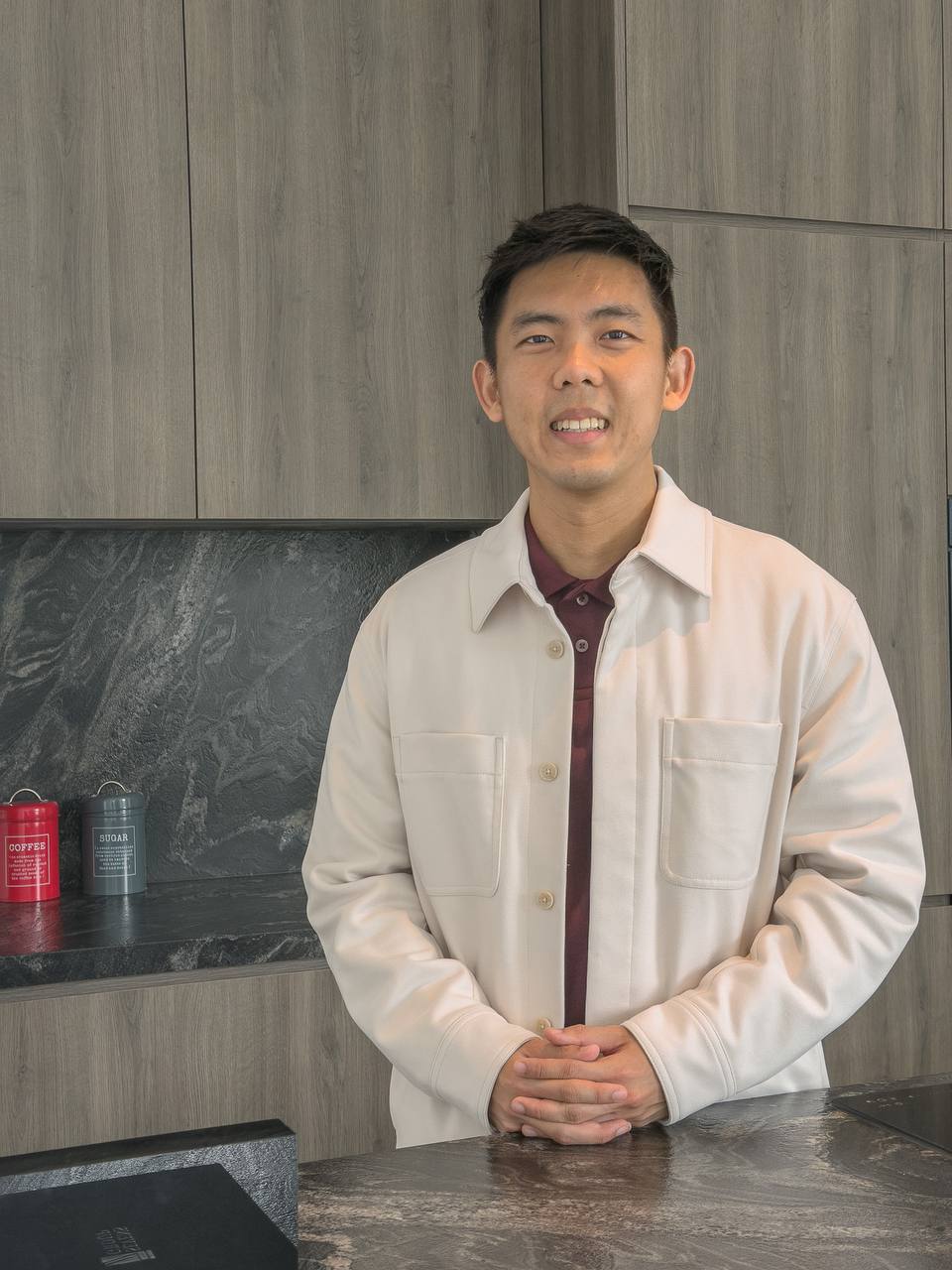
Delvin is a licensed property agent based in Singapore, focusing on private residential property and helping busy professionals build their property portfolios. With a data-driven approach and an Economics degree from NUS, he guides clients through every stage of their property journey — from first purchase to portfolio growth. Delvin is known for his straightforward advice, deep market knowledge, and commitment to delivering results.
Book an Appointment →
Ready to Take the Next Step?
Whether you are buying, selling, or exploring your options, I offer a free consultation to help you make confident property decisions.
Book an Appointment