The Complete Guide to Buying Private Property in Singapore (2026)
 Delvin Goh
Disclaimer: This article is for general educational purposes only and does not constitute financial, legal, or professional advice. The information presented is based on publicly available data and may not reflect the most current regulations, rates, or policies. Every individual’s financial situation is unique. You should consult a qualified financial advisor, mortgage banker, or legal professional before making any property purchase or financing decisions. The author and this website accept no liability for any loss or damage arising from reliance on the information provided.
TL;DR: This guide covers everything you need to know about buying private property in Singapore, from eligibility and BSD/ABSD to financing and the step-by-step process. If you are an HDB owner looking to upgrade to a private condo, pay special attention to the HDB-to-Private Transition section covering ABSD implications and remission conditions.
Why Private Property in Singapore?
Singapore’s private residential market continues to be one of the most sought-after property segments in Asia. Whether you are a first-time buyer upgrading from an HDB flat or a seasoned investor expanding your portfolio, understanding the ins and outs of private property purchases is essential.
In this comprehensive guide, I break down every step of the buying journey, so you can make confident, well-informed decisions.
Eligibility: Who Can Buy Private Property?
Singapore Citizens, Permanent Residents, and foreigners can all purchase private condominiums and apartments. However, there are restrictions on landed property for non-citizens.
- Singapore Citizens: No restrictions on any private property type
- Permanent Residents: Can purchase condominiums and apartments freely; landed property requires SLA approval
- Foreigners: Can purchase condominiums and apartments in approved developments; landed property in Sentosa Cove only
Understanding the Costs
Purchase Price and Valuation
The property price is typically the higher of the agreed transaction price or the market valuation. This matters for loan calculations and stamp duty.
Buyer’s Stamp Duty (BSD)
BSD is calculated on a progressive scale:
| Property Value | Rate |
|---|---|
| First $180,000 | 1% |
| Next $180,000 | 2% |
| Next $640,000 | 3% |
| Next $500,000 | 4% |
| Next $1,500,000 | 5% |
| Remaining amount | 6% |
Additional Buyer’s Stamp Duty (ABSD)
ABSD rates depend on your residency status and the number of properties you own. As of 2026, Singapore Citizens pay 20% ABSD on their second residential property, while foreigners pay 60% on any residential property purchase.
Here is the full ABSD rate table as of 2026:
| Buyer Profile | 1st Property | 2nd Property | 3rd and Subsequent |
|---|---|---|---|
| Singapore Citizen | 0% | 20% | 30% |
| Permanent Resident | 5% | 30% | 35% |
| Foreigner | 60% | 60% | 60% |
ABSD cannot be included in your bank loan and is payable on top of BSD. For most first-time Singapore Citizen buyers, ABSD is 0%. If you already own a property, decoupling is one strategy married couples use to manage the 20% ABSD on a second purchase.
Financing Your Purchase
Loan-to-Value (LTV) Limits
For your first housing loan, the maximum LTV is 75%, meaning you will need at least 25% in cash and CPF. Of this, a minimum of 5% must be in cash.
Total Debt Servicing Ratio (TDSR)
Your monthly debt obligations including the new mortgage cannot exceed 55% of your gross monthly income.
The Buying Procedure: Step by Step
Buying a private property in Singapore follows a defined procedure. Here is what happens at each stage, how long it takes, and the cash you need ready. The figures below assume a $3,000,000 resale condo bought by a Singapore Citizen as a first property.
Step 1: Determine Your Budget (Before You Start Viewing)
Work out your total upfront cash and CPF requirement before you view a single unit. For a $3M condo you need roughly $274,600 in cash upfront, covering the 5% cash downpayment, Buyer’s Stamp Duty, legal fees, and miscellaneous costs, plus around $600,000 from CPF for the 20% downpayment balance. For a complete component-by-component breakdown, see how much cash you need to buy a condo in Singapore.
Step 2: Obtain an In-Principle Approval (IPA)
Apply to two or three banks for a mortgage pre-approval. The IPA confirms how much the bank will lend based on your income and TDSR, and it usually takes a few working days. An IPA is typically valid for around 30 days. Do not commit to any unit before you have this in hand.
Step 3: Engage a Buyer’s Agent
Engage an agent who knows the private market and your target districts. This costs you nothing as the buyer. In Singapore the seller pays commission to both the seller’s agent and the buyer’s agent, so representation is free to you. How I represent a buyer runs from the first budget conversation through to key collection. You can also check the transactions I have handled before you engage anyone.
Step 4: Shortlist and View Properties
Visit at least three to five units to compare value, layout efficiency, tenure, and condition. Timing here is entirely up to you and can run from a few weekends to a few months.
Step 5: Secure the Unit With the Option to Purchase (OTP)
Once you decide on a unit, you pay the 1% option fee to secure the Option to Purchase. On a $3M condo that is $30,000, paid in cash or by cashier’s cheque. The OTP gives you the exclusive right to buy the unit within the option period and takes the property off the market. This amount is offset against the purchase price, so it is not an extra cost, but you need it ready.
Step 6: Exercise the OTP Within 14 Days (Resale)
For a private resale, you have 14 days to exercise the OTP by signing it and paying the balance of the downpayment, typically a further 4% (or as agreed). On a $3M condo that is $120,000. At this point you appoint your conveyancing lawyer. The exercise fee can be paid using CPF. If you do not exercise within the window, you forfeit the 1% option fee.
Step 7: Stamp Duty, Conveyancing, and Completion
Within 14 days of exercising the OTP, Buyer’s Stamp Duty must be paid (on a $3M condo, $119,600). BSD is paid in cash first and can be reimbursed from your CPF OA afterwards. Your conveyancing lawyer runs title searches and legal requisitions, liaises with the bank on loan disbursement, and prepares for completion. Completion typically occurs around 8 to 12 weeks after the OTP date for a resale purchase, when the bank disburses the loan, the balance is paid, and keys are handed over.
Step 8: Collect Keys and Renovate
On completion you collect the keys. Budget $50,000 to $150,000 for renovation on a resale unit, and remember CPF cannot be used for renovation.
How to Buy a Resale Private Property
The resale path differs from a new launch in a few important ways. Here is the resale-specific procedure end to end.
- Secure the OTP. The seller grants you the Option to Purchase once you pay the 1% option fee. The OTP fixes the price and the exercise window.
- Arrange your valuation. Your bank commissions a valuation of the unit. The loan is granted on the lower of the purchase price or the bank’s valuation, so a valuation below your agreed price means a larger cash top-up. Confirm the indicative valuation before committing where possible.
- Exercise within the 14-day option window. Sign and return the OTP and pay the balance downpayment (typically 4%) within 14 days. Miss the window and you lose the 1% option fee.
- Conveyancing. Your lawyer conducts title searches, legal requisitions to the relevant authorities, and checks for any encumbrances or outstanding charges on the property. They also coordinate the seller’s discharge of any existing mortgage.
- Stamp duty. BSD (and ABSD if applicable) must be paid within 14 days of exercising the OTP. For resale purchases, stamp duty is typically paid in cash first due to the short turnaround, with CPF reimbursement applied for afterwards.
- Completion. Around 8 to 12 weeks after the OTP date, the transaction completes. The bank disburses the loan, the balance purchase price is paid, the title transfers, and you collect the keys.
The main advantage of resale is immediate occupancy: you can move in or renovate as soon as completion is done, rather than waiting years for a new launch to reach TOP. For a fuller comparison, see new launch vs resale condo in Singapore.
The HDB-to-Private Transition
For HDB owners upgrading to private property, there are several critical considerations that differ from a straightforward private purchase.
ABSD for HDB Owners Buying Private Property
If you purchase a private residential property while still owning an HDB flat, you will be classified as a second-property owner and must pay 20% ABSD upfront. Singapore Citizens who have fulfilled MOP are legally allowed to retain both properties, but the ABSD cost makes this impractical for most upgraders.
For a $3 million condo, that is $600,000 in ABSD payable in cash at the point of purchase. This is why most HDB upgraders either sell first or plan for remission.
Important for SPR HDB owners: If you acquire private property before completing your HDB flat’s Minimum Occupation Period (MOP), HDB requires you to sell that flat within 6 months of acquiring the private property, regardless of ABSD considerations. If you acquire the private property after fulfilling MOP, you may retain both.
ABSD Remission for Married Couples
Married couples where at least one spouse is a Singapore Citizen can apply for ABSD remission under specific conditions:
- The private property must be purchased jointly by both spouses
- ABSD must be paid upfront; the remission is processed as a refund
- The existing property must be sold within 6 months of the purchase date (for completed properties) or the TOP/CSC date (for uncompleted properties)
- The remission application must be submitted to IRAS within 6 months of selling the existing property
- Neither spouse may have acquired any other residential property between the purchase and remission application
Financial Planning for the Switch
Planning the HDB-to-private transition requires careful financial sequencing:
- Estimate your HDB sale proceeds. Check recent transactions for similar flats in your area on HDB’s resale portal, or work from a valuation based on recent comparables
- Calculate your CPF refund. When you sell your HDB, the CPF used plus accrued interest must be refunded to your CPF OA. This reduces your cash proceeds but replenishes your CPF for the next purchase
- Factor in the ABSD bridge. If buying before selling, you need cash for the ABSD upfront
- Consider the timing gap. You may need to rent for a few months between selling your HDB and collecting keys for your new condo
- Budget for renovation. Private condos, especially resale units, may require $50,000 to $150,000 in renovation
Many of my clients find that selling their HDB first, renting for 3 to 6 months, and then purchasing the private property is the safest approach. It eliminates ABSD risk, gives full visibility of sale proceeds, and allows stress-free property hunting.
Tips From the Ground
Based on my experience navigating Singapore’s private property market, here are my top recommendations:
- Always factor in ABSD. It is a significant cost that many first-time upgraders overlook
- Compare new launches vs resale. New launches offer deferred payment schemes, while resale units let you move in quickly
- Check the lease tenure. Freehold properties command a premium but 99-year leasehold can still offer excellent value
- Research the developer. Track record matters for new launches
- Consider future MRT lines. Upcoming transport infrastructure can significantly boost property values
Frequently Asked Questions
What is the procedure for buying private property in Singapore?
The procedure has seven main stages: set your budget including stamp duties and legal fees, obtain an In-Principle Approval for your mortgage, engage a buyer’s agent and shortlist units, secure the unit by paying the 1% option fee for the Option to Purchase, exercise the OTP within 14 days for resale by paying the balance downpayment, complete conveyancing through your lawyer, and collect keys. Budget around 8 to 12 weeks from securing a unit to completion for a resale purchase. On a $3M condo you need roughly $274,600 in cash upfront, mainly the 5% cash downpayment, Buyer’s Stamp Duty, and legal fees.
How do I buy a resale condo in Singapore?
For a resale condo, the seller grants you an Option to Purchase once you pay the 1% option fee. You then have 14 days to exercise the OTP by paying the balance of the downpayment, typically a further 4%. Your bank arranges a valuation, your conveyancing lawyer runs title and legal requisition checks, stamp duty is paid within 14 days of exercise, and the purchase completes around 8 to 12 weeks after the OTP date when the bank disburses the loan and keys are handed over.
Do buyers pay agent commission in Singapore?
No. In Singapore, buyers do not pay agent commission for any property purchase, whether resale or new launch. The seller pays commission to both the seller’s agent and the buyer’s agent through a cobroke arrangement. Engaging a buyer’s agent to represent you costs you nothing.
How much cash do I need to buy private property in Singapore?
For a Singapore Citizen buying a first $3M resale condo with a 75% loan, you need approximately $274,600 in cash upfront, covering the 5% cash downpayment ($150,000), Buyer’s Stamp Duty ($119,600), legal fees, and miscellaneous costs. After applying for CPF reimbursement of the BSD, your net cash outlay falls to around $155,000. See the full breakdown in the dedicated cash guide.
Have questions about buying private property in Singapore? Get in touch. I am happy to provide a personalised consultation.
Get the free Condo Moving Guide
The 5 puzzles of selling and buying at the same time, and how to avoid being stuck between homes. I'll send it to your inbox.
You're all set.
The guide is on its way to your inbox. If you've downloaded one of my guides before, check that earlier email.
Something went wrong. Please try again, or email me at delvin@delvingoh.com.
About Delvin Goh
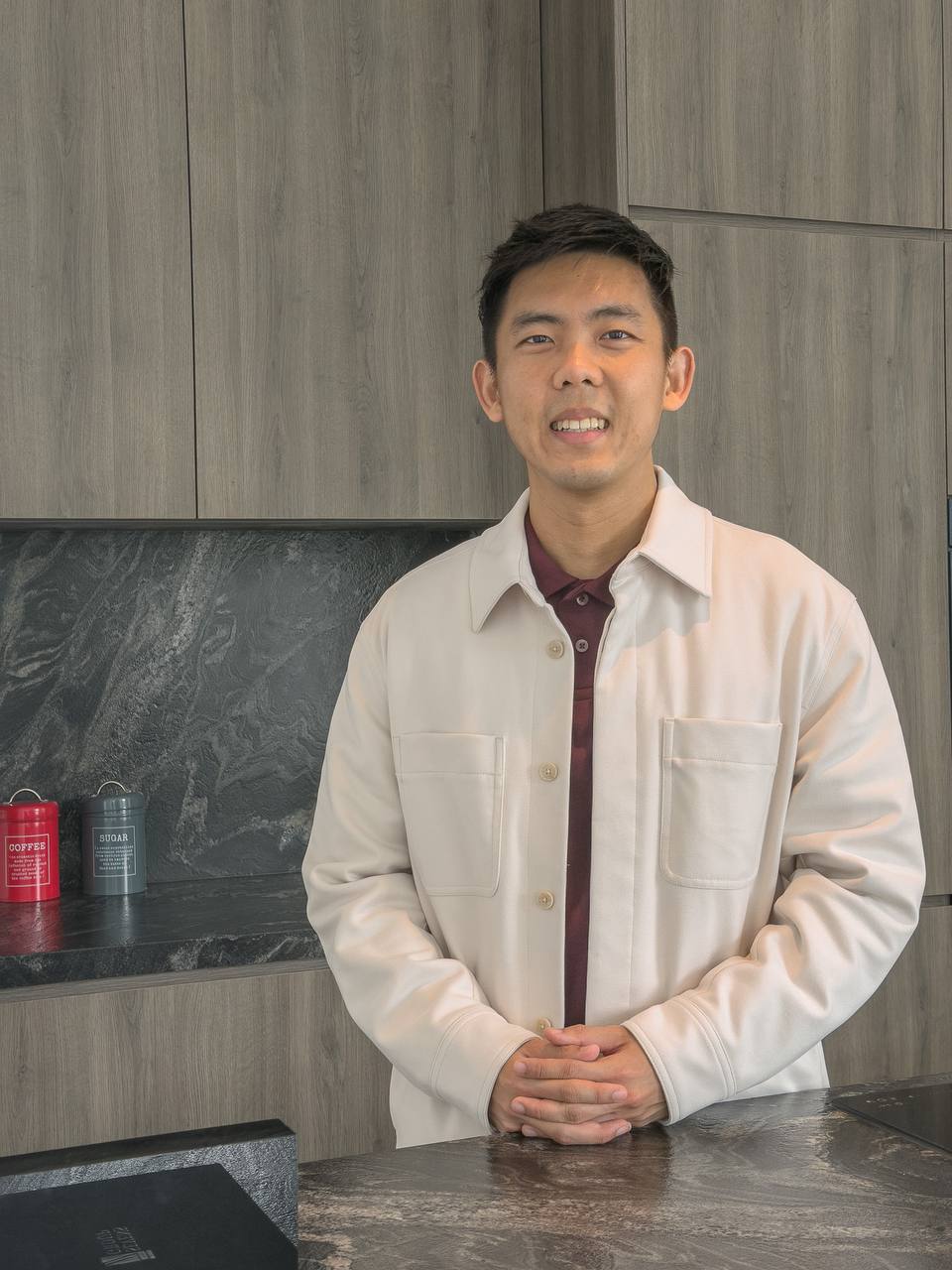
Delvin is a licensed property agent based in Singapore, focusing on private residential property and helping busy professionals build their property portfolios. With a data-driven approach and an Economics degree from NUS, he guides clients through every stage of their property journey — from first purchase to portfolio growth. Delvin is known for his straightforward advice, deep market knowledge, and commitment to delivering results.
Book an Appointment →
Ready to Take the Next Step?
Whether you are buying, selling, or exploring your options, I offer a free consultation to help you make confident property decisions.
Book an Appointment